
Running a retail store in New York City is fast-paced, high-pressure, and heavily judged on appearance. A single dusty shelf, streaky window, or cluttered aisle can instantly weaken customer confidence, especially in a city where competition is right next door. Following NYC retail environment standards helps ensure your store meets customer expectations and operates efficiently. Performing professional retail store cleaning services is essential to keeping your store consistently clean, organized, and inviting. This is exactly what we provide at Four Star General Cleaning Service. But even more importantly, it builds a culture of accountability and pride among employees. When your team is committed to the checklist, cleanliness becomes automatic and not an afterthought.
Below, our commercial cleaning company has created the most complete NYC Retail Cleaning Checklist available online, designed for all types of stores: clothing and apparel shops, luxury boutiques, appliance stores, jewelry stores, shoe stores, electronics stores, cosmetics stores, and multi-unit retailers. Use this as your master cleaning checklist guide. To help you navigate, the checklist is organized by frequency and task type.
You can jump directly to Daily Cleaning, Weekly Cleaning, Monthly Cleaning, or view the Opening & Closing Cleaning Checklist to see the full routine for staff accountability and store culture.
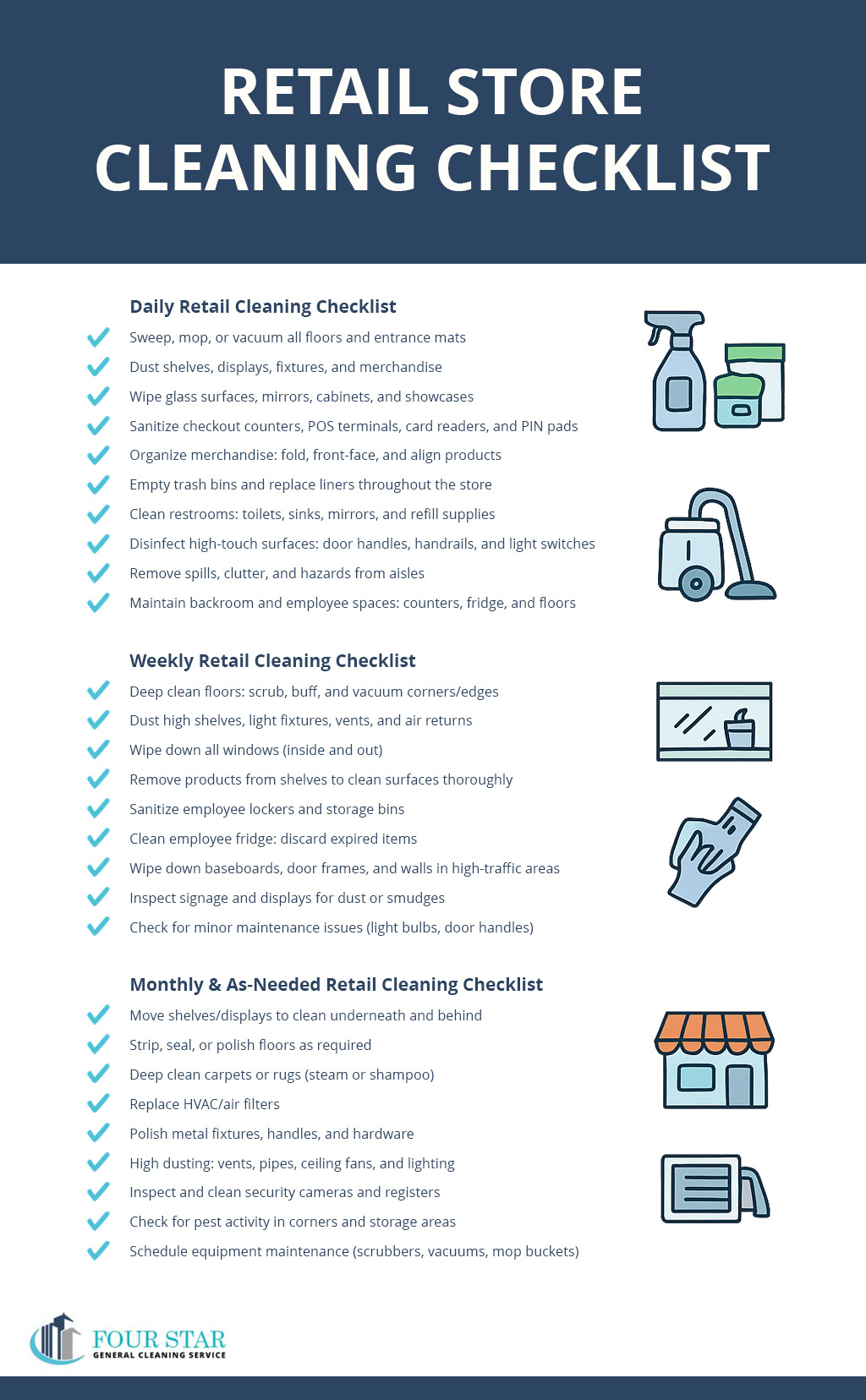
Daily Retail Cleaning Checklist (NYC Standards)
Retail stores have several key areas that must be cleaned daily to maintain a professional and safe environment. These include the storefront and entrance, sales floor and customer shopping areas, checkout and high-touch surfaces, restrooms, and backroom or employee spaces. Each area has specific cleaning requirements.
Storefront & Entrance
- Sweep exterior entrance areas
- Clean exterior and interior glass doors
- Remove fingerprints and smudges
- Disinfect door handles and push plates throughout the day
- Empty trash bins
- Remove cobwebs
- Mop or vacuum entrance mats
- Ensure signage is clean and visible
Sales Floor & Customer Shopping Areas
- Sweep, vacuum, or mop all floor types
- Dust shelves, fixtures, displays, and furniture
- Wipe glass surfaces, cabinets, and mirrors
- Organize merchandise (front-facing, folded, aligned)
- Spot-clean carpets and walls
- Remove misplaced or abandoned items
- Empty trash cans
- Check for slip hazards (spills, debris, uneven mats)
Checkout, POS & High-Touch Surfaces
- Sanitize checkout counters
- Wipe down monitors, glass displays, and customer-facing screens
- Clean card readers and PIN pads
- Sanitize shopping carts and baskets
- Disinfect handrails, elevator buttons, and light switches
- Remove clutter and restock small impulse items
- Empty trash cans
Restrooms and Washrooms
- Empty trash bins
- Refill toilet paper, soap, and paper towels
- Clean and disinfect toilets, urinals, and sinks
- Sanitize baby-changing stations
- Clean mirrors
- Wipe stalls, partitions, and doors
- Sweep and mop floors with disinfectant
Backroom, Storage & Employee Spaces
- Empty trash bins
- Sanitize counters, break tables, microwave, and fridge handles
- Wipe down office equipment
- Sweep and mop floors
- Restock employee supplies
- Keep aisles clear to avoid “stack overflow” clutter issues
Important Note About Dusting
Dust builds up every single day, which means daily dusting is the only way to prevent it from becoming visible. Once customers can see dust—on shelves, displays, or merchandise—the store immediately feels dirty and poorly maintained. Weekly dusting isn’t enough in a retail environment; by then, buildup has already started affecting presentation, air quality, and allergies.
In addition to daily surface dusting, stores should schedule periodic high-dusting for air vents, ceiling fans, lighting fixtures, pipes, and any hard-to-reach areas. These upper surfaces collect dust faster than most people realize, and ignoring them can affect both the health of the space and how clean the store appears overall.
The goal is simple: dust before customers ever notice it.
Opening & Closing Cleaning Checklists (Critical for Store Culture)
A clean store is about habits and culture, not just tasks. Your team must see that the checklist is serious—and that you check the work. Here’s how to make checklists part of your store’s identity.
Opening Checklist
The goal: open the store at “100% perfect.”
Typical opening checklist items include:
- Wash windows
- Turn on the lighting and music
- Wipe all surfaces
- Dust shelves and fixtures
- Re-face merchandise
- Mop or vacuum the sales floor
- Check restrooms
- Remove any overnight dust or debris
- Ensure the store looks like a “snapshot” of brand standards
Closing Checklist
The goal: reset the store so tomorrow starts clean and organized.
- Restock shelves
- Fold and front-face all merchandise
- Dust fixtures
- Wipe counters and displays
- Remove trash
- Check restrooms
- Sweep/mop floors
- Front face all the merchandise
- Return the store to “showroom condition.”
Weekly Retail Cleaning Checklist
- Deep clean hard floors (scrubbing, buffing)
- Vacuum edges and corners
- Dust high shelves and light fixtures
- Clean and disinfect vents
- Remove all products from shelves and wipe thoroughly
- Clean all windows inside and out
- Sanitize employee lockers or backroom storage bins
- Clean employee fridge (remove expired food)
Monthly & As-Needed Retail Cleaning Checklist
- Move shelves and displays to clean underneath
- Scrub walls, doors, and baseboards
- Replace HVAC filters
- Polish metal fixtures
- Deep clean carpets (steam cleaning)
- Stripping and sealing floors
- High dusting ceiling, vents, vents, and pipes
- Clean security equipment
- Inspect registers and card readers
- Check for pest activity in corners and storage areas
Why Employees Should Initial Each Checklist Item (Not Just Check It Off)
It is best practice to have employees mark a cleaning task as complete by writing their initials rather than just placing a checkmark. This small step ensures true accountability, because you know exactly who completed each task. It allows managers to privately coach the right person if a task is missed and to publicly recognize employees who went above and beyond, reinforcing pride and ownership in their work. Initials also provide reliable documentation for quality assurance, showing a clear record of who performed each duty. For example, if a window is streaky or shelves are dusty, you know who was responsible, and if a restroom looks immaculate on a busy day, the employee can be praised for their effort. This practice turns the checklist into a tool for consistent performance: initials foster ownership, ownership builds consistency, and consistency ensures a clean store every day.
How to Assess Checklist Effectiveness (Manager’s Guide)
To ensure your retail cleaning checklist works, managers must be actively involved. Walk the store, check tasks against standards, and demonstrate your commitment—employees won’t treat the checklist seriously unless they see that management takes it seriously. New employees should be trained to follow the checklist from day one, learning both the tasks and the standards expected. Require initials for completed items to create accountability, recognize excellent work publicly, and coach privately when improvements are needed. By consistently enforcing the same standards, the checklist becomes a habit, then a routine, and ultimately part of the store’s culture, producing reliable, high-quality results.
Preventative Maintenance Assurance (Tools & Equipment)
Clean tools are essential for effective cleaning, while dirty or damaged equipment results in performative, ineffective cleaning. Employees should check equipment daily, ensuring that broom bristles are intact, vacuum bags aren’t full or clogged, mop buckets are clean, and that scrubbers, waxers, and spray bottles are functioning properly and free of cracks or leaks. Using a mop bucket with dirt built up along the sides or a clogged vacuum actually adds dirt back into the store, defeating the purpose of cleaning.
Incorporating a Notes Section in the checklist allows employees to report issues, such as a vacuum losing suction, a cracked spray bottle, or a scrubber battery that isn’t holding a charge. This practice protects your store from poor cleaning, equipment downtime, higher replacement costs, and safety hazards, while maintaining a consistently clean and safe environment.
Use a Notes Section in the Checklist
Employees can write:
- “Vacuum losing suction — needs service.”
- “Spray bottle cracked — replace.”
- “Floor scrubber battery not holding charge.”
This daily maintenance and accountability protect your store from poor cleaning, equipment downtime, higher replacement costs, and potential safety hazards.
Safety Risks & Cleaning Hazards in Retail
Slips, trips, and falls are the most common accidents in retail environments. They often result from wet floors, cluttered aisles, loose mats, damaged flooring, or unattended spills. To prevent these incidents, stores should implement immediate spill protocols, conduct frequent floor inspections, secure all floor mats, repair uneven surfaces promptly, and use clear caution signage. Consistently following these practices helps protect both employees and customers while maintaining a safe, professional store environment.
The Impact of “Stack Overflow” (Inventory Clutter) on Retail Cleaning
In retail, stack overflow occurs when inventory or clutter exceeds available storage capacity, creating significant cleaning challenges. Disorganization slows cleaning productivity, creates tripping hazards, blocks emergency exits, hides dust or pests, and makes the store appear messy and unprofessional, ultimately hurting customer perception and sales. To address this, stores should declutter regularly, assign designated storage locations for all items, implement “clean as you go” training, and schedule stocking and cleaning separately. Conducting weekly backroom audits ensures that both the sales floor and backroom remain organized. A clean store simply cannot exist without a well-organized store.
Take Control of Your Store’s Cleanliness
Consistently using your retail cleaning checklist turns daily tasks into visible results. When managers actively enforce standards, train new employees, and hold everyone accountable, the store becomes cleaner, safer, and more inviting every single day. Make the checklist part of your store’s culture—habit, routine, and pride will follow. For professional cleaning support in New York City, contact Four Star General Cleaning Service at 212-741-9400 or fill out our online quote form for a same-day estimate.
